

TDU Co-Founder Ken Paff looks back on TDU's founding Convention and the guiding principles that have sustained TDU over the five decades.
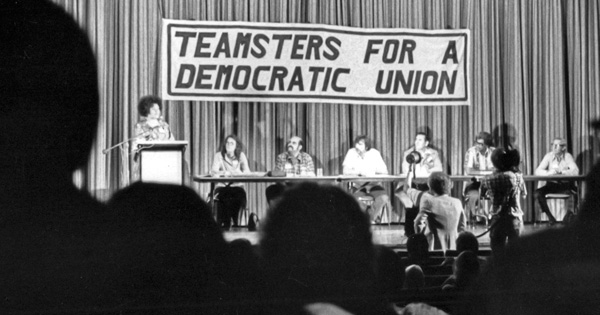
TDU was born in 1976. It was a very different era for the Teamsters Union and the labor movement.
Teamster president Frank Fitzsimmons and top IBT officials were self-serving and complacent. There was no organizing program. No strategies for the future, including the coming deregulation of trucking. Fitz preferred golfing with President Nixon to taking on employers or protecting Teamster jobs.
Freight Teamsters organized wildcat strikes in 1970 and again in 1973 to fight substandard contracts that did not keep up with inflation.
A dissident group formed, spread, and then quickly collapsed: Teamsters United Rank and File.
Jimmy Hoffa disappeared in July 1975. No one was coming back to save us—we would have to save ourselves.
Teamsters for a Decent Contract
TDU was born as Teamsters for a Decent Contract (TDC) in the run-up to the 1976 National Master Freight Agreement, which covered some 350,000 Teamsters in the trucking industry.
The National Agreement contract was Hoffa’s crowning achievement, covering hundreds of employers.
I was a Cleveland Local 407 Teamster and freight driver and jumped into the movement. We petitioned. We spread leaflets in trailers. We put stickers on trailers and light poles. We had contract demands. We lacked leaders, but we were tenacious. And we had issues that members cared about.
In April 1976, Fitzsimmons called the first-ever national freight strike, for just two days. It helped him look tough. And we won a cost-of-living clause; it was a major TDC issue, because inflation was high.
The Formation of TDU
TDC activists decided to form a reform movement: Teamsters for a Democratic Union (TDU). We were a ragtag group, but with big ideas. We were young radicals and also experienced Teamsters who had been battle-tested.
It wasn’t easy. TDU leaders were harassed and threatened.
Our only delegate to the 1976 IBT Convention in Las Vegas, Pete Camarata of Local 299, took the mic to cast the lone vote against Fitzsimmons. He was beaten by Teamster goons outside the Convention hall.
When he came back to Detroit, Pete was expelled from the Teamsters. We won an injunction in federal court to reinstate him.
In my own Local 407, we were attacked the first time we passed out leaflets outside the union meeting, with one member sent to the hospital.
Again, we went to federal court and won a judgement.
We were learning the legal system with help from dedicated attorneys. IBT leaders were learning that we were not going away.
Founding Convention
TDU’s founding Convention was in September 1976, at a university near Akron, Ohio. We didn’t have much going for us, but we had clear principles to guide our efforts.
We would be about rank and file power, not following one leader. We focused on specific goals, and found ways to win small victories like changing local bylaws.
We drafted a “Rank & File Bill of Rights,” and over the next 15 years we won many of them, including the right to vote for International Union officers and majority rule on contract and strike votes.
50 Years of Rank-and-File Power
Even when top Teamster officials were coming after us with goon squads and doing the bidding of organized crime, we never thought the problem in our union was a few bad leaders.
We always thought it was not enough leaders— and for 50 years TDU has worked to develop more rank-and-file leaders through education, workshops, contract fights and contract enforcement, the pension movement, and so much more.
Fifty years ago, we charted a course set on rank-and-file power, and we are still on that course.
We’re proud of our history and plan to make a lot more of it.