

UPS is making major changes to its business model. To fight back, we need to understand what’s coming and why.
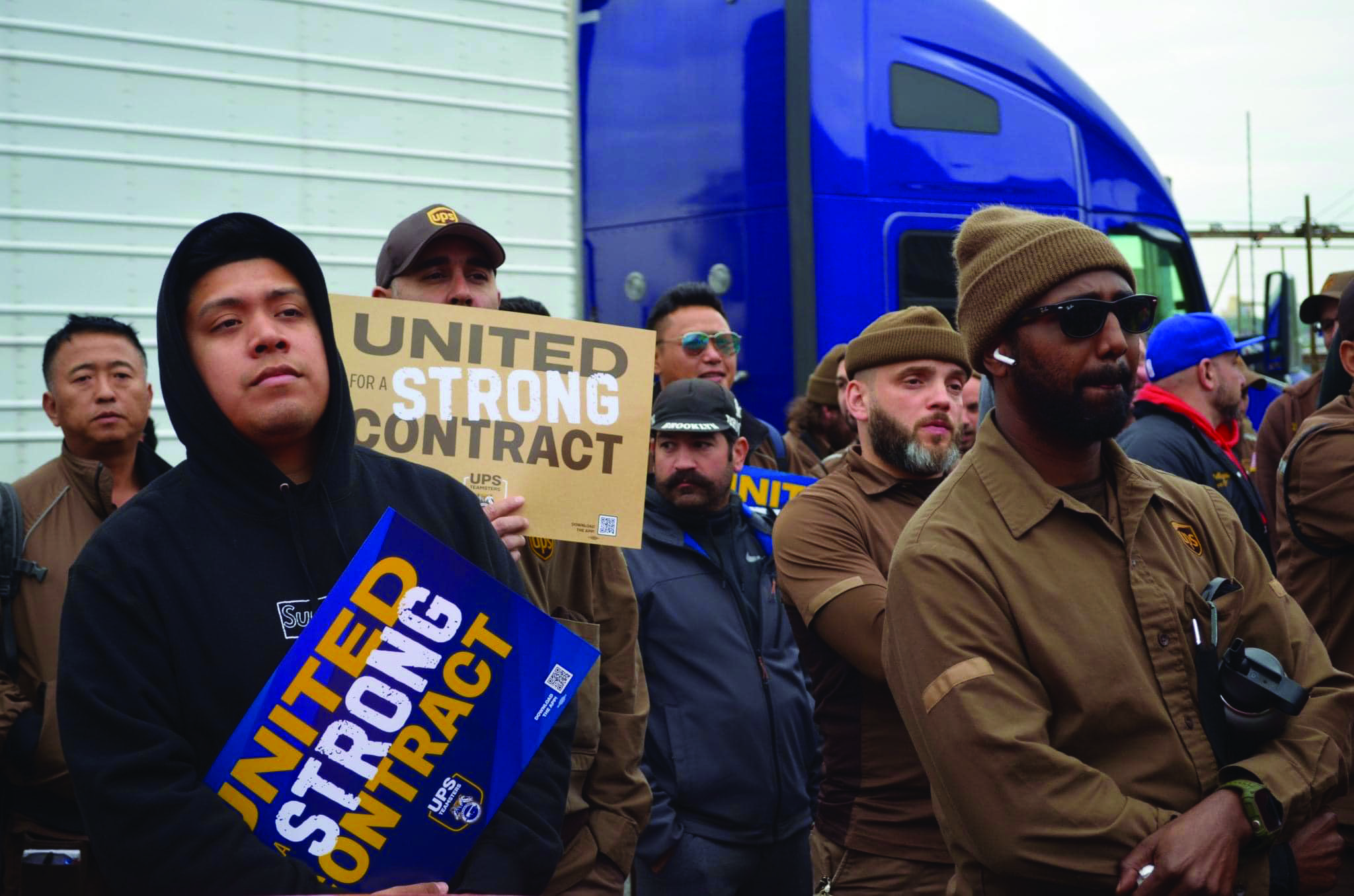 Building closures. Automation. Change of operations. By the middle of next year, UPS will cut the number of Amazon packages we deliver in half.
These changes are happening across the country under CEO Carol Tomé’s “Better, Not Bigger”
strategy. Tomé cares about making UPS “better” for investors, not for Teamster employees or our customers.
We need to understand what’s coming and be prepared to take action to protect our jobs.
Boosting Profit Margins by Lowering Volume
Residential packages are the least profitable ones because the last mile of every delivery is the most expensive one.
Under so-called “Better, Not Bigger” strategy, UPS will focus on delivering more-profitable packages, even if that comes at the cost of lowering overall volume.
Overall, the company expects average daily U.S. volume to drop about 8.5% this year but revenue per package to increase by 6%.
If volume does decrease, it will mean some reduction in jobs. As members retire or leave the company, not all will be replaced.
Why Cut Amazon Deliveries?
The biggest drop in volume will come from Amazon. UPS has already been cutting the number of Amazon packages it delivers every year.
Amazon accounts for 20% to 25% of UPS’s packages in the U.S. But UPS makes less profit per Amazon package compared to other packages.
“Amazon is our largest customer, but it’s not our most profitable customer,” Tomé told a call of Wall Street analysts.
That’s why UPS will cut the number of Amazon packages we deliver in half by the middle of next year.
Amazon volume will go down, but UPS’s overall profits per package will go up.
Automation & Building Closures
UPS is also looking to cut costs by consolidating its network. The company plans to close 10% of its buildings, mostly small ones in rural areas, and consolidate its operations in bigger, modern facilities in urban areas.
Automation will lead to some permanent job loss, especially in inside sorting work where the company is installing automated sorting technology.
Automation will not affect package car jobs.
Our contract gives us the right to monitor and negotiate over the effects of this technology, but we can’t stop it altogether.
Focus on Contract Enforcement & Union Action
Employees don’t control company business decisions about volume. Management does. But as union members, we can protect our jobs by enforcing our contract.
When there are changes of operations, we will drag the company to the table and fight for our members.
When there are layoffs, we will fight to make the company follow the contract and honor members’ seniority.
When volume drops, drivers can follow the methods and use 9.5 rights and 8-hour requests to distribute the work. There is no excuse for being a runner when members are laid off.
Inside workers can fight back by filing supervisors-working grievances and enforcing their daily guarantee. No supervisors should be working when members are laid off.
Fighting for the Jobs of the Future
UPS is changing. Our job as Teamsters is to protect what we have and to fight to make sure the jobs of the future are good union jobs.
If the company gets its way, more deliveries will be done by its non-union UPS Supply Chain Solutions.
UPS also bought Roadie, a subsidiary that connects businesses to drivers who use their personal vehicles to make same-day deliveries.
Part of the next contract campaign needs to be fighting to make sure that these deliveries are being made by Teamster drivers making Teamster wages.
In April, UPS purchased Andlauer Healthcare Group for $1.6 billion. Tomé told investors that UPS’s goal is to be the world’s number one logistics provider of healthcare and specialized products.
Stockton Local 439 was the first local to organize UPS Healthcare workers into our union. Thousands of formerly non-union UPS specialists and admins are joining the Teamsters.
Bargaining to organize at UPS has to be a major part of our UPS contract campaign in 2028. We can use our leverage to win card-check agreements with UPS’s current non-union workforce.
Technological change doesn’t mean no jobs—it often means new and different jobs.
Organizing at Amazon is also a must to protect our standards at UPS, stop the race to the bottom, and win a better future for a million Amazon workers.
For more than a century, the Teamsters Union has set the standard in the logistics industry—and we are not backing down now.
 Organizing UPS Healthcare
“UPS Healthcare workers in Stockton joined my local in 2024. UPS has already told investors they plan to grow their Healthcare business. Teamsters can organize these workers.”
Jeremy Brake, Vice President
Local 439, Stockton
 Bargain to Organize
“When specialists and admins like me wanted to join the union, we were able to reach a card-check agreement with UPS. In 2028 we can use our bargaining leverage to help organize UPS’s non-union Healthcare and Supply Chain Solution workforce.”
Pete Hinton
Local 89, Louisville
 A Coordinated Union Plan
“UPS has a coordinated plan. We need to coordinate too as a national network of UPS Teamsters. That’s why I’m in TDU.”
Angie DeNero
Local 676, New Jersey
 Organizing Amazon
“Our job as Teamsters is to raise standards across the industry. When we organize Amazon workers, we put the brakes on the race to the bottom in our industry.”
Basil Darling
Local 804, New York
 Stay United
“To face automation and layoffs we need to stay united. ”
Patrick Woods
Local 135, Indiana