

Going on strike isn’t easy. It takes planning and organization to be successful. Here are five ways to organize a strike that can win.
Growing numbers of Teamster members are fighting back against the rising cost of living by striking to win better wage increases and stronger contracts.
The International Union has been backing members with enhanced strike benefits of up to $1,000 a week starting on day-one of a strike. The IBT’s strike fund now has more than $400 million.
Here are five ways to organize a strike that can win.
Know Your Strike Issues
Start early by having conversations with your co-workers to get on the same page about what people are willing to fight for and what steps you can take to start building unity.
“Months before our contract expired, we held meetings at the landfill to talk about the wages and benefits we deserved,” said Local 439 Republic Steward Jose Zepeda.
“It wasn’t easy at first because not everyone agreed or even got along. But the more we focused on wages as our key demand, the more we became united,” Zepeda said.
Build Members’ Confidence
Taking actions that grow in intensity over time builds unity and confidence among members, and it demonstrates a credible strike threat to management.
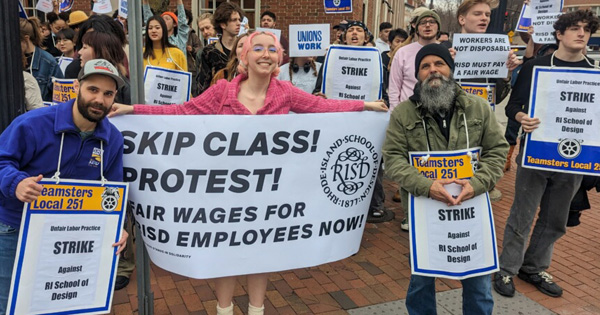
“We had to go on strike to win our first contract, but we didn’t start there,” said John Cabral, a building caretaker and Local 251 shop steward at the Rhode Island School of Design (RISD). “We organized an informational picket and a one-day ULP strike. That built everyone’s confidence and showed members our jobs are protected. Management couldn’t replace us.”
“By the time we went on strike, we had built up pressure and support. Our campus community knew what we were fighting for and had our back,” Cabral said.
Build a Contract Action Team
Local 320 members at the University of Minnesota had a contract expiring in September. They formed a Contract Action Team (CAT) in February, a half-year before expiration.
Throughout the spring the CAT collected hundreds of Contract Unity Pledge cards to build unity around their demands. They organized turnout for a strike authorization vote and recruited stewards to become strike captains.
“We built a strong team that included members from different departments and social groups,” said Estifanos “Steve” Tesfagiorgis, a Local 320 steward. “When the strike started we had practice taking action together.”
Get ahead of management intimidation with one-on-one conversations and group meetings explaining members’ rights, strike benefits, and job security. A strong communication system will help you reach as many people as possible.
“Members were scared they could lose their healthcare and wouldn’t receive any strike benefits. Stewards explained to people that their benefits would remain in place and strike pay begins on day-one,” said Tesfagiorgis.
Strike Captains
Every picket line and shift needs a strike captain. Strike captains are responsible for coordinating the logistics of the strike with the local union and communicating with members.
From making a schedule to dealing with the press and police, strong captains are needed to make the strike successful.
Rhonda Banks, a shop steward at Continental Cafe in Local 135, was a strike captain for their nine-week strike. “When we knew we were going on strike, I asked everyone to choose their shifts and volunteers for each different task. Everyone was ready to step up and take responsibility.”
The Continental Cafe strike took place over nine weeks of winter. “We took turns taking breaks to warm up in the tent and made sure there were enough people walking the line at all times.”
“A member volunteered to bring lunch in a crock pot every day to make sure everyone stayed on the line,” says Banks.
Clear, consistent communication is a must. Make sure your phone lists are up to date and use group chats to keep members informed.
“I was in constant communication with members every day,” said Chris Eads, a shop steward from US Foods in Local 135 who coordinated a picket line extension. “We had to be clear with members about why we were honoring the picket line and provide updates in real time.”
Strike captains also set the tone for conduct on the picket line and work to stop problems before they start.
“Don’t allow threats or violent language to take place. Establish a working relationship with law enforcement. Be a problem solver, not an instigator,” says Eads.
Keep the Picket Line Moving
A row of lawn chairs is not a picket line. Picket lines should be active, with members displaying unity—and making sure Teamsters and other supporters know not to cross.
A silent picket line is a pretty sad one. Prepare fun chants ahead of time to keep energy up. Set up a speaker to play music. People should be marching and moving, not sitting around looking lost.
When Local 89 members went on strike at Fire King in Kentucky, they made the picket line a fun place to be. They brought bullhorns and chanted at the entrances. The local brought a grill to cook out, and squirt guns for members to have fun cooling off.
“We turned that picket line into a party,” says Dale Beanblossom, a Fire King worker who served as a strike captain. “We even played cornhole in front of the management entrance! It kept people going during a long strike.”
Supercharge Your Strike
Creative tactics can heighten the effectiveness of a strike and build public support.
Local 251 groundskeeping and custodial staff at RISD built alliances with students and professors during their contract fight. “Professors couldn’t contractually honor picket lines, so they brought their classes outside in a show of solidarity,” said Cabral.
“The university got nervous when they saw students getting involved. Students staged a walkout in support of the workers and took over downtown Providence, bringing musical instruments, art, chants, and signs.”
During the Republic Services strike in the summer, the International Union worked with locals to extend picket lines and disrupt company operations.
Striking Republic Services Teamsters traveled and set up picket lines in Georgia, Washington, California, Illinois and more. Over 3,500 Teamsters honored the picket lines.
“The extended pickets made us feel more united and showed the company we weren’t messing around,” says Local 439 Republic shop steward Jose Zepeda.
Local 135 in Indiana used ambulatory picketing at Continental Cafe. Striking Teamsters would follow and disrupt scabs as they attempted to make deliveries during the strike.
“We made sure that members who participated in ambulatory pickets knew all the do’s and don’ts. It was an effective tactic, and it was demoralizing for the company,” said Banks.
“One manager tried so hard to lose us he flew over a speed bump and sent the truck flying. He ended up not making any deliveries at all that day, and we had a great laugh,” Banks said.
Get Informed & Get Prepared
To learn more about how to organize a contract campaign and get strike-ready, contact TDU at 313-842-2600 or [email protected].